The Corner Table Rule: Why Local Judgment Beats Any Recommendation List

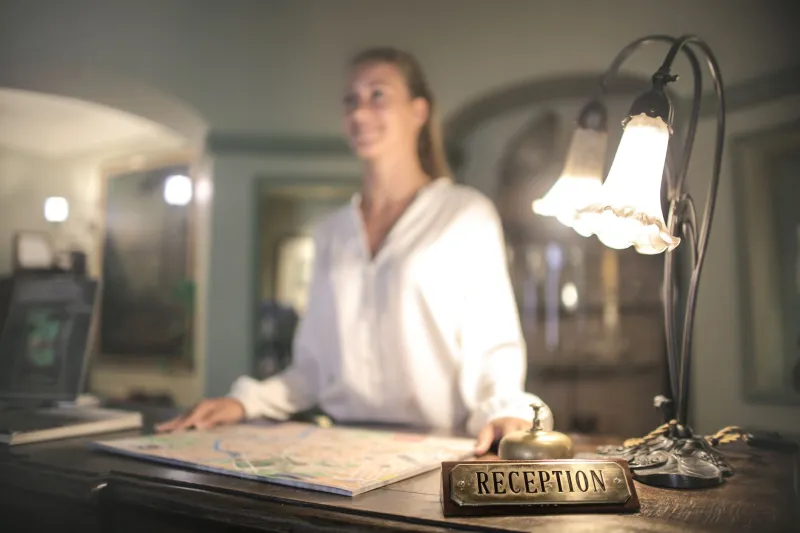
Photo: Matti Blume, CC BY-SA 4.0, via Wikimedia Commons
You land on a Tuesday, you've got one free night, and your phone is holding eleven saved restaurants, four of which are inside a half-mile radius of a single pedestrian street. The app says they're all excellent. The app is not lying, exactly. It's just answering a different question than the one you're actually asking.
The question is: where should I be tonight, at this hour, with this person, given that I have six hours and one shot at a good memory?
A recommendation engine can't answer that. A companion who lives here can, and the difference between the two is the whole point.
The list is not the reservation
Concierge platforms optimize for two variables: availability and aggregate ratings. That's a perfectly fine system for a Wednesday lunch. It falls apart on a Friday night in Beyoğlu, because the things that make a room good at 7 p.m. — the light, the quiet, the attentive service — are not the things it does well at 10:30, when the same space has become a standing-room situation with a speaker system.
Someone local knows the turn. They know that a place becomes a different restaurant after 9:15, that the second-floor room is where you actually want to sit, and that the table by the window everyone photographs is the worst seat in the house because it's on the service path.
That's not a list of recommendations. That's information you can't scrape.
What that looks like in practice
Say the plan is dinner on the European side, and then something afterward that isn't simply another bar. A local sequence might look like this: an early glass in Karaköy while the ferries are still running and the light is doing the thing it does over the water, then a walk uphill into Çukurcuma or Cihangir, where the streets narrow and the noise drops and dinner is at a place with maybe nine tables and no sign worth photographing.
Or it goes the other direction entirely — a ferry across to Kadıköy, because the twenty-minute crossing at sunset is the single best thing you can do with twenty minutes in this city, and no app is going to suggest it as an activity. Then dinner in Moda, where the pace is slower and the tables spill onto the sidewalk and nobody is going to rush you out.
Or, if the mood is different and the budget isn't a concern, it's up the Bosphorus to a place where the fish is whatever came in that morning and the rakı gets poured slowly and the whole thing takes three hours because that's how long dinner is supposed to take.
The customs nobody explains
Istanbul dining has its own grammar, and getting it right is the difference between being a tourist with a good table and a guest who belongs in one.
Meze arrives in waves, not as courses — you eat as it comes, and ordering everything at once is a rookie move that guarantees cold food. The table orders together and shares, so a companion who knows a menu can steer the order in a way that keeps six plates in rotation instead of twelve going soggy. Rakı gets cut with water, sipped, and paced against the food, never treated like a shot. Tea shows up whether you asked or not. And the finish is Turkish coffee, which is half beverage and half excuse to sit for another twenty minutes.
The bill — hesap — arrives when you ask for it, not before. Nobody is turning your table. That's a feature of the culture, not a failure of service, and understanding it changes how you plan: you don't book a 9 p.m. dinner with a 10:45 somewhere else, because the second thing is not going to happen on schedule.
Timing is the real itinerary
Most bad nights out in Istanbul aren't bad choices. They're bad spacing.
Traffic across the bridge can quietly eat forty minutes of a perfectly planned evening. So can a cab that doesn't come, or a decision made at 9:40 p.m. that should have been made at 7. The local advantage isn't knowing a secret restaurant. It's knowing that a place on the Asian side and a place in Nişantaşı don't belong in the same night, and that the walk from one neighborhood to the next is sometimes the best part of the evening and sometimes a nonstarter.
When the plan collapses
The most valuable version of this shows up when something breaks. The reservation evaporates. The place is closed for a private event. It's raining sideways. A recommendation list leaves you standing on a sidewalk scrolling. Judgment gives you a second move in under a minute — a nearby place that's always fine, a different neighborhood that makes more sense in the rain, a decision to just eat meze somewhere warm and call it.
That's access. Not a VIP rope, not a name-drop at the door. Just a person who has been here long enough to have options.
One thing to get right
A companion is not a tour guide, and treating her like one — quizzing her on history, handing her an itinerary to execute — flattens the whole thing. The point isn't to be led around. It's to spend an evening with someone whose instincts are better than your research, and to let those instincts do some of the work.
Ask what she'd do with the night. Then do that. It's almost always a better plan than the eleven saved tabs on your phone.