The Guest Is Sacred: What Turkish Hospitality Reveals About the Lost Art of Making Someone Feel Valued

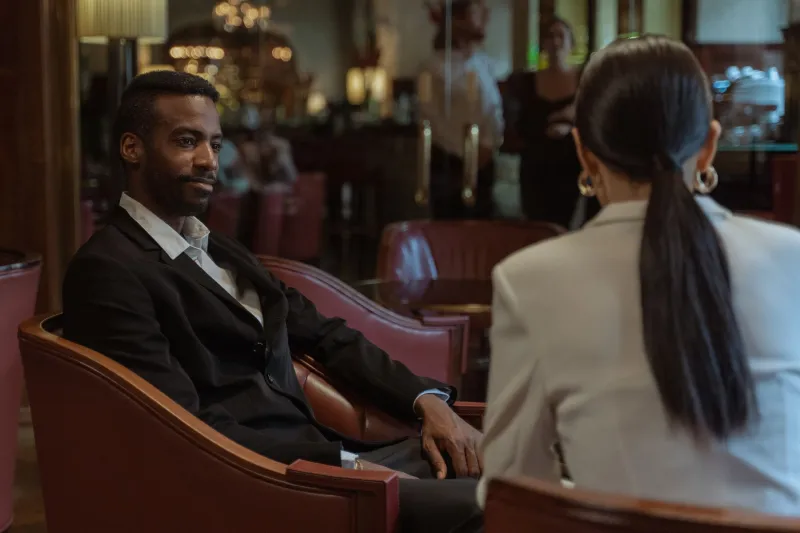
Photo by Photo by Kuzzat Altay on Unsplash on Unsplash
In Turkey, there's a phrase that gets translated roughly as "a guest is a gift from God." It's not marketing copy. It's not a slogan on a hotel lobby wall. It's a genuine cultural orientation that shapes how people behave when someone crosses their threshold — and it produces a quality of welcome that most Americans have never experienced in their daily lives.
Understanding where that tradition comes from, and what it actually looks like in practice, says a lot about why certain kinds of companionship feel fundamentally different from others — and why that difference matters more than most men initially expect.
A Thousand Years of Getting This Right
The Ottoman Empire wasn't just a political entity — it was one of the most sophisticated hospitality cultures the world has ever produced. At its height, the empire operated an elaborate system of hans (caravansaries) where travelers could rest, eat, and be cared for, often free of charge, as a matter of civic and religious principle. The logic was explicit: how you treated a stranger in need was a direct reflection of your character, your community, and your relationship to something larger than yourself.
This wasn't charity in the modern sense — it was a philosophy. The guest wasn't a burden to be accommodated. The guest was an honor to be received.
That orientation filtered down through centuries of Turkish domestic and social culture, producing a set of instincts around hospitality that are genuinely distinct from anything in the Western tradition. When a Turkish host offers you tea, they're not going through a procedural courtesy. They're expressing a worldview: that your comfort matters, that your presence is welcome, and that the time you spend in their company deserves to be marked with something real.
What "Being Made to Feel Welcome" Actually Feels Like
Most Americans have a working definition of hospitality that amounts to "nobody was rude and the service was reasonably prompt." That's a pretty low bar, and it reflects something real about how transactional the American service economy has become.
True hospitality — the kind rooted in the Ottoman tradition — operates at a completely different register. It's anticipatory rather than reactive. A genuinely skilled host isn't waiting for you to express a need; they've already considered what you might want before you knew you wanted it. The tea arrives before you thought to ask. The conversation pivots toward what you seem most interested in. The environment adjusts, almost imperceptibly, to make you more comfortable.
This isn't magic. It's the result of a cultural emphasis on attentiveness — on training yourself to read another person's state and respond to it, rather than simply executing a script.
For men who spend their professional lives in environments that demand constant self-sufficiency, the experience of being on the receiving end of that kind of attentiveness can be quietly startling. It's not pampering in a passive sense. It's something more active — a sustained act of attention directed entirely at your experience.
Why American Dating Culture Struggles to Deliver This
Modern American dating operates under a set of implicit rules that are almost perfectly designed to prevent anyone from feeling genuinely prioritized.
The etiquette of "not seeming too eager" means nobody makes the first move toward warmth. The performance of casualness means nothing is ever quite acknowledged as important. The fear of vulnerability means needs go unstated and therefore unmet. The ambient competition of online dating — where everyone is aware, on some level, that the other person has other options — creates a low-grade tension that's the opposite of what hospitality feels like.
Nobody is the host. Nobody is the guest. Everyone is just... negotiating.
That dynamic produces interactions that are technically social but feel oddly hollow — like the form of connection without the substance. You went through the motions. You talked, maybe laughed, probably had a decent enough time. But did you feel genuinely attended to? Did you leave feeling like someone had made it their business to ensure your experience was good?
For most men, the honest answer is no. And over time, that absence accumulates.
What Premium Companionship Borrows From That Tradition
The best companionship experiences — the ones men actually remember, the ones that recalibrate their expectations — share something fundamental with the Ottoman hospitality tradition: they're organized around the guest's experience rather than the host's convenience.
That sounds obvious, but it's surprisingly rare in practice. It means someone has thought about what you might need before you arrive. It means the attention you receive is genuine rather than performed — oriented toward you specifically, responsive to what you actually say rather than what was scripted in advance. It means you leave feeling like the time was well spent not because you were entertained, but because someone made it their purpose to ensure you were.
That's a cultural inheritance, not a service feature. And it's one that Istanbul, more than almost anywhere else, has preserved with remarkable fidelity.
What to Actually Look For
If you're evaluating what kind of companionship experience is worth your time and investment, the Turkish hospitality framework gives you a useful filter.
Ask yourself: does this feel like a transaction, or does it feel like being welcomed? Is the attention you're receiving reactive (responding to explicit requests) or anticipatory (responding to what you seem to need)? Does the person across from you seem genuinely interested in your experience, or are they executing a role?
The difference between those two things isn't subtle once you've felt it. And once you've felt it, the transactional version becomes very hard to go back to.
That's what a thousand years of getting hospitality right will do. It sets a standard that most of the modern world is still trying to figure out.