Invisible Logistics: Why the Best Nights Out Are Engineered, Not Improvised
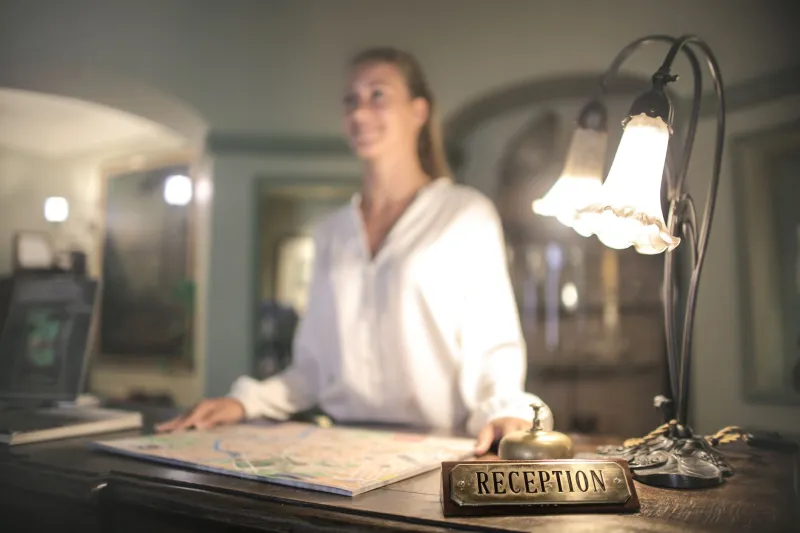
There's a reason a great hotel night feels effortless: someone built it long before you arrived. The pillow menu exists because a guest once complained. The corner table was held because the concierge reviewed the reservation list at four in the afternoon. The car is idling at the curb because somebody calculated how long dinner usually runs and padded it by ten minutes.
Companionship works the same way. The evenings people describe as "natural" or "spontaneous" are almost always the ones where the logistics vanished into the background — handled early, quietly, by someone who thought about the entire arc of the night instead of just the reservation.
What follows is that architecture, translated from luxury hospitality into the kind of evening you book with a companion.
The Check-In Before the Check-In
At a five-star property, the front desk already knows your name, your room preference, and whether you drink still or sparkling. None of that appeared by magic. It was gathered.
The companionship equivalent is the pre-date conversation — light, but deliberate. Which neighborhood. How formal. Whether you want to talk shop or not talk at all. Dietary limits. How late you're realistically willing to be out on a Tuesday when you have a 7 a.m. flight to Denver. A companion who asks these questions isn't being bureaucratic; they're pre-loading the evening so the two of you don't spend the first forty minutes doing intake.
If you're the client, answer specifically. "Somewhere nice" is a non-answer, and it costs you. "Somewhere with a corner table and no live band, because I'll be hoarse from a conference" is a brief. One of those gets you a good night. The other gets you a table near the kitchen.
Pacing Is a Form of Respect
Hotels pace guests without announcing it. The welcome drink. The unhurried walk to the room. Turndown service timed for when you've left for dinner. Nothing rushes you, and nothing drags.
An evening has the same rhythm problem. There's the first twenty minutes, the long middle stretch, and the point where the night either lifts or flattens. Good pacing means the conversation isn't fired off all at once, there's a genuine pause between the bar and the table, and the tempo matches how much energy you actually have left after a workday.
The tell of an unplanned night is compression — everything crammed between 7:30 and 10:00, followed by an awkward "so… what now?" A well-paced evening leaves a little appetite on the table for later.
Transitions Are Where Good Nights Die
Here's the detail almost nobody thinks about: the gap between the restaurant and wherever you're going next. That's where momentum goes to die. The check takes forever. Nobody knows where to park. The second spot is a forty-minute walk and it's raining.
In a great hotel, this is the seamless handoff — the porter who appears, the car that's already there, the key that works on the first try. In companionship terms, it's a companion who has already thought about the bill arriving, the car being arranged, and a second venue that's good on a Wednesday. Frictionless is not a luxury flourish. It's the whole product.
Leave Room to Improvise
The best concierges plan but don't over-script. They have a backup and they know when to use it — and when to leave you alone.
Over-planning is a real failure mode. A night scheduled to the minute feels less like an evening and more like a press tour. The target is a structure with slack: two or three anchors, open space between them, and mutual permission to abandon the plan if the first bar turns out to be perfect.
The Exit Is Part of the Design
Checkout at a good hotel is designed: bill ready, car called, no queue, no standing around in a lobby with your luggage. A companion who has thought about the end of the night doesn't leave you on a sidewalk at 11:40 figuring out logistics on your phone. They know whether you're a handshake-at-the-door person or a linger-and-talk person, and they don't drag an evening past its natural close just to fill the time you paid for.
A graceful ending isn't the absence of connection. It's proof that the connection had shape.
What This Means If You're the Client
Three practical notes.
First, arrive with preferences, not tests. Vague requests create guesswork, and guesswork creates a night that feels generic — because it is.
Second, ask about the plan without micromanaging it. "What's the shape of the evening?" is a reasonable question. A minute-by-minute itinerary request is not, and it tends to flatten the whole thing.
Third, judge the night on the transitions, not just the highlights. Anyone can deliver a good dinner. What separates a premium experience is what happens between the good parts.
Because what you're actually paying for isn't a reservation, a table, or a well-dressed companion at your side. It's the absence of friction — a night that feels like it just happened, which is precisely what good design is supposed to feel like.