Unplugged and Undivided: How Smart Executives Are Paying for Something Screens Can Never Deliver
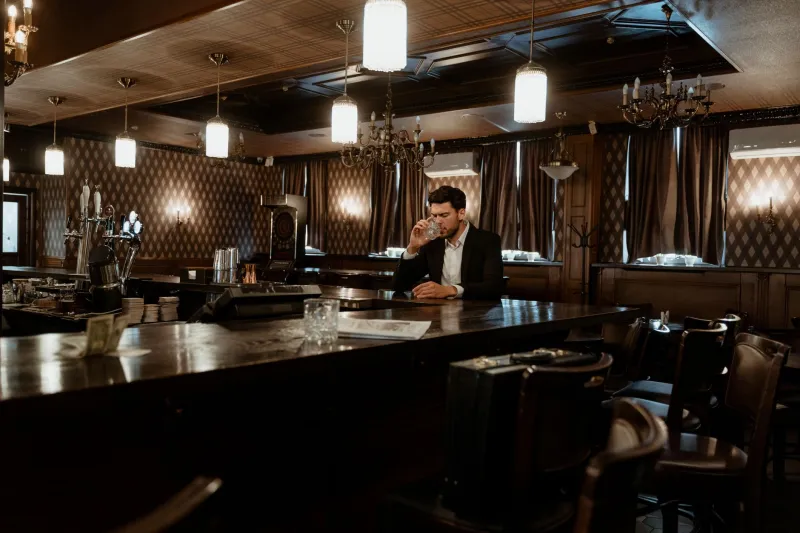
There's a particular kind of exhaustion that doesn't show up in lab work or on a sleep tracker. It lives somewhere behind the eyes of a man who has been reachable every waking hour for the past decade. His calendar is optimized. His inbox is managed. His notifications are color-coded by urgency. And yet, somewhere between the third Zoom call of the morning and the last Slack ping before midnight, something quietly hollows out.
This is the professional reality for a significant slice of American executives in 2025. And increasingly, the antidote they're reaching for isn't a spa weekend or a productivity app. It's something far more elemental — an evening in the company of someone who isn't looking at a screen, isn't waiting for a buzz in her pocket, and isn't anywhere else but here.
Curated companionship platforms have started paying close attention to this shift. What was once a niche preference has become one of the most consistently requested experiences among high-value clients: the analog evening.
The Attention Economy Has a Casualty — And It's You
Behavioral economists have spent years documenting what the attention economy costs us collectively. But the personal toll on men who operate at the executive level is something else entirely. These are individuals whose professional worth is measured almost entirely in decisions, outputs, and response times. The pressure to remain perpetually connected isn't just cultural — it's often contractual.
The irony is suffocating. The same technology that made these men successful has made genuine rest nearly impossible. Even leisure gets colonized. A dinner out becomes a chance to check markets. A vacation becomes a working trip with better weather. The phone never fully goes away because the phone is the job.
So when a client sits down for an evening and the woman across from him has no interest in her own device — when she's fully oriented toward the conversation, the meal, the moment — the effect is almost disorienting at first. Then it becomes something closer to relief.
Presence as a Genuine Commodity
Here's a thought worth sitting with: when was the last time someone gave you their complete, uninterrupted attention for two hours?
Not the performative kind, where someone nods along while mentally composing a reply. Not the distracted kind, where eye contact breaks every few minutes toward a glowing rectangle. Actual, sustained, curious attention — the kind that makes you feel like what you're saying matters, like the person across from you finds you interesting rather than your title or your net worth.
For most executives, the honest answer is: it's been a while.
This is precisely why the concept of the digital detox companion has moved from quirky anecdote to genuine market trend. Premium companionship, at its best, has always traded in presence. But the deliberate, structured removal of technology from the experience — agreed upon in advance, maintained throughout the evening — elevates that presence into something almost therapeutic.
It's not about romance in the conventional sense. It's about recovering a kind of human contact that modern professional life systematically erodes.
What an Analog Evening Actually Looks Like
The specifics vary, obviously, depending on the client and the companion. But the throughline is consistent: technology recedes, and the human experience expands to fill the space.
Some clients request evenings that are almost aggressively old-school — a proper dinner at a quiet restaurant, conversation that meanders without agenda, maybe a walk afterward. No background music curated by an algorithm. No phones on the table. No Instagram-worthy moments being engineered for later.
Others want something more structured: a cultural experience, a gallery visit, a live performance, followed by drinks and the kind of conversation that actually goes somewhere. The companion's role in these settings isn't decorative. It's participatory. She's engaged, curious, and genuinely present — not executing a script, but actually there.
What clients consistently report afterward is a version of the same thing: they forgot to check their phone. For a man whose device is essentially a fifth limb, that's not a small thing. That's a minor miracle.
Why This Trend Is Accelerating in 2025
A few converging forces are pushing this particular preference into the mainstream of premium companionship culture.
First, the sheer saturation of digital life has reached a tipping point for many high-achievers. The novelty of connectivity wore off years ago. What replaced it is a low-grade chronic stress that most men have simply normalized — until they experience its absence and realize how heavy it was.
Second, there's a growing cultural permission, particularly among American professionals, to acknowledge that hyperconnectivity has costs. The discourse around burnout, digital wellness, and intentional disconnection has matured enough that seeking out technology-free experiences no longer reads as eccentric. It reads as smart.
Third — and this is where curated companionship platforms specifically come in — the quality of the human interaction has to be worth unplugging for. A mediocre conversation is never going to compete with the dopamine loop of a notification feed. The bar is high. Which is exactly why the curation aspect matters so much. Not every companion is equipped to carry an analog evening. The ones who can are genuinely rare, and the platforms that identify and present them are offering something with real, demonstrable value.
The Istanbul Nights Perspective
There's a reason Istanbul has always understood this instinctively. The city's culture of hospitality — the meyhane evenings that stretch for hours, the tea that keeps coming, the conversation that has nowhere urgent to be — was built around the premise that time spent in genuine company is time well spent. Not productive time. Not optimized time. Just good time.
American executives are increasingly arriving at the same conclusion from a different direction. Not through cultural inheritance, but through exhaustion. They've optimized everything else. What they haven't optimized is rest. What they haven't protected is presence.
The premium companionship experience, when it's done right, offers exactly that. An evening where the only agenda is the evening itself. Where the woman across from you isn't managing her personal brand or half-present on three platforms simultaneously. Where the conversation is the point.
In a market saturated with experiences that promise everything and deliver distraction, that's not a small offering. That's the whole thing.
The Bottom Line
Luxury has always been defined by scarcity. For most of human history, what was scarce was material — fine fabrics, rare ingredients, exclusive access. In 2025, the genuinely scarce resource isn't material at all.
It's attention. It's presence. It's the quiet, unremarkable, completely extraordinary experience of being with someone who is fully, actually there.
For overwhelmed executives who've built their careers on always being reachable, an evening of genuine human presence — unhurried, uninterrupted, and deliberately analog — isn't an indulgence. It's a correction. And the men who've experienced it once tend to seek it out again.
Because some things, it turns out, can't be delivered by a screen.