Lobby, Elevator, Room: A Discreet Arrival Playbook for Hotel Evenings
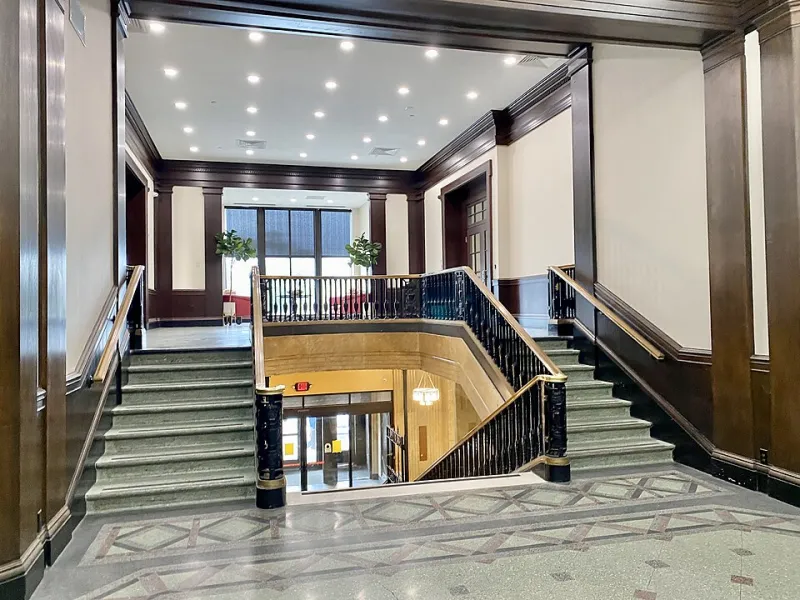
Photo: w_lemay, CC BY-SA 2.0, via Wikimedia Commons
Ask anyone who has spent years arranging evenings in hotels and they'll tell you the same thing: the night rarely goes wrong over dinner. It goes wrong in the lobby, at 7:04, when two schedules don't quite line up and the front desk is watching and nobody has decided who walks in first.
None of that is dramatic. It's just logistics. But logistics is where confidence lives, and a client who has thought through the arrival — even lightly — comes across as someone who has done this before. Which is exactly the impression you want.
Here's the field guide we'd hand a friend.
Timing is the entire trick
The single best thing you can do for a discreet arrival is not be in the lobby when your companion walks through it. That means staggering the arrival: you're already upstairs, or you're a few minutes behind, or you're at the bar twenty feet from the elevator bank with a drink you're not in a rush to finish.
Practically, the goal is for the two of you to occupy the same building without ever occupying the same public space at the same moment. In a large Midtown or downtown Chicago property, that's easy. In a smaller boutique hotel with one elevator and a chatty concierge, it takes a bit more thought.
If you've never met in person, arrange to meet in the room rather than the lobby. Give a clear time and a clear way to reach you — the companion's agency or platform will typically handle the message. Sitting in a bar waiting for someone you've only seen in photos is not the relaxed start you imagined, and it puts a stranger in the position of scanning a room for a face.
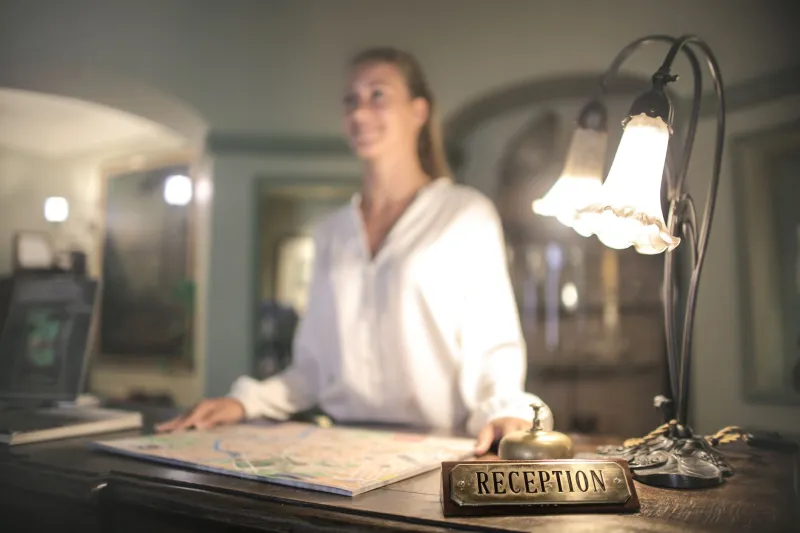
The front desk is not a threat
Most clients overthink the front desk. Here's the reality: hotel staff have seen every configuration of adult life pass through their lobby, and they are trained to be incurious about the personal business of paying guests. They are not publishing a newsletter.
The only thing that draws attention is nervousness. Fidgeting, hovering, answering questions with elaborate stories — that's the tell. A brief, friendly nod and the phrase "I'm expecting a guest" is complete. Nothing else is required, and nothing else helps.
If you're asked to log visitors or send up a key, do it without commentary. It's paperwork, not an interrogation. Be pleasant, be brief, and move on.
Elevators, hallways, and the last hundred feet
A companion arriving alone should be able to go straight to the room. Send the floor and room number in advance, in writing, and confirm the elevator doesn't require a key card for guests — a hotel that runs on tap-to-floor will need a workaround, and you'd rather discover that by asking the desk at check-in than at 8 p.m. with someone waiting.
When you're the one in the elevator with her, conversation on the ride up should be light. Nothing that reveals the shape of the evening to whoever is pressed against the other wall. The last hundred feet are not the place to discuss anything.
Inside the room, the door closes and the hotel disappears. That's the whole point of the staging.
When the clock misbehaves
Plans slip. A delayed flight, a late-running meeting, a city that decides to close a bridge at precisely the wrong moment. The rule in every case is the same: over-communicate early, not accurately late.
If you're going to be twenty minutes behind, say so the moment you know, not when it's already true. A short message — "running about 20 behind, room's under my name, make yourself comfortable" — costs nothing and spares a companion the awkwardness of standing in a lobby deciding what to do next.
If she's the one running late, don't hover. Hotels are excellent places to wait. Order something. Read. The evening hasn't failed; it's just started on a different clock.
And if the timing collapses entirely — the meeting ran to midnight, the flight was cancelled — say so directly and sort out the rebooking. Nobody's evening improves because you were too polite to cancel.
The morning, and the goodbye
The same discretion that governs arrival governs departure. Escorting someone to the lobby at checkout is not required, and it's usually less smooth than a simple goodbye at the door.
Breakfast plans are a nice gesture if you've discussed them in advance and if the morning allows. Don't improvise them at 9 a.m. with a suitcase in hand and a flight at noon.
The point of all of this
None of these details are about hiding something shameful. They're about a simple principle: the smoother the room is, the less attention anyone has to spend on it. The front desk shouldn't be part of your evening. The lobby shouldn't be a scene. The elevator should be four floors of nothing much.
What's left is the part you actually booked — an unhurried evening and someone good to spend it with. Preparation isn't the opposite of romance. It's what makes room for it.