Talking Points: What Separates a Companion Who Listens From One Who Simply Hears
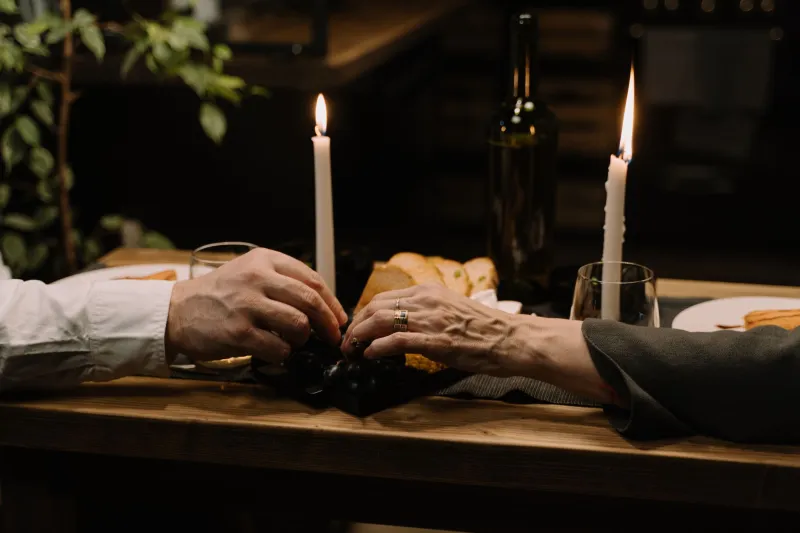
There's a moment most people recognize — usually somewhere between the second drink and the main course — when a conversation stops feeling like an exchange and starts feeling like something else entirely. Something warmer. More alive. You're not just trading sentences anymore; you're actually connecting. If you've ever experienced that with a premium companion, you already know what we're talking about. And if you haven't, it's worth understanding why that quality is rarer — and more valuable — than most people assume.
The companionship world has spent a long time being reduced to its most surface-level elements. But the clients who keep coming back, the ones who treat curated companionship as a genuine lifestyle choice rather than a one-off experiment, will tell you the same thing: the physical draw gets you in the door. The conversation is what makes the evening worth remembering.
Why Dialogue Is a Skill, Not a Personality Trait
A lot of people assume that being a good conversationalist is something you either have or you don't — like height or a sense of rhythm. That's not really how it works. Meaningful dialogue is a craft, and like any craft, it's built from specific, learnable techniques that take time and intention to develop.
The best companions understand this intuitively. They've put in the work. They know how to ask an open-ended question that doesn't feel like an interview. They understand the difference between waiting for someone to finish talking and actually absorbing what was said. They can pivot a conversation that's stalled without making it feel forced, and they know when silence is more comfortable than noise.
In cities like Istanbul — where conversation has historically been considered an art form, where the meyhane table culture practically demands that guests bring their full intellectual presence — this kind of communicative depth is almost expected. Istanbul Nights draws heavily from that tradition. The idea that a companion is there simply to look good across from you at dinner is, frankly, a pretty limited vision of what the experience can be.
The Active Listening Advantage
Here's something most people don't think about: active listening is not passive. It requires effort, focus, and a genuine interest in the other person's inner world. For a companion, it's one of the most powerful tools in the kit.
What does it actually look like in practice? It's remembering that you mentioned your company's Q3 deadline when you sat down, and circling back to ask how that went. It's noticing when your energy shifts and adjusting the tone accordingly — lighter when you need relief, more grounded when you want to be taken seriously. It's the absence of the glazed-over expression that tells you someone is mentally composing their grocery list while you're talking.
For American professionals especially — people who spend their days in back-to-back meetings where everyone is half-listening while planning their next response — being genuinely heard is a surprisingly rare and disarming experience. A companion who delivers that? They're offering something most people can't find in their everyday social lives, and that's not a small thing.
Shared Interests as the Architecture of Connection
Good conversation doesn't happen in a vacuum. It needs raw material — shared reference points, mutual curiosity, overlapping interests that give both people something real to build on. This is why the best companions invest in themselves beyond the obvious. They read broadly. They stay current on culture, news, and ideas. They develop genuine passions — food, travel, art, sports, finance, whatever it happens to be — because authentic enthusiasm is contagious in a way that performed interest never is.
When a companion can speak credibly about a topic you care about — whether that's the NBA playoffs, the geopolitics of the Middle East, or the best Michelin-starred restaurants in New York — the dynamic shifts. You're no longer explaining yourself to someone who's nodding politely. You're in dialogue with someone who has something to add. That's a fundamentally different experience, and it's one that clients at the premium end of the market increasingly seek out and expect.
Emotional Attunement: Reading the Room in Real Time
Beyond intellectual engagement, there's another layer of conversational skill that separates the truly exceptional from the merely pleasant: emotional attunement. This is the ability to read what someone needs from a given moment — not just what they're saying, but what's underneath it.
Sometimes a client wants to vent about a rough week and feel understood without judgment. Sometimes they want to laugh and be distracted from everything heavy. Sometimes they want to be challenged a little, pushed to think differently about something they've been stuck on. A companion with strong emotional intelligence can sense which mode is called for and move into it naturally, without being asked.
This is where the Istanbul Nights philosophy of curation really matters. Pairing clients with companions isn't just about surface-level compatibility — it's about finding someone whose conversational range and emotional register actually fits what a particular person needs. That matchmaking element is what elevates a platform from a directory into something closer to a genuine service.
The Lasting Impression Problem
Here's the honest truth about memorable experiences: the details fade faster than you expect. A week after a dinner out, you might not remember exactly what you ate. A month later, you might struggle to recall the restaurant's name. But you almost always remember how you felt — whether you were engaged, whether you laughed, whether you left the evening feeling lighter or more energized than when you arrived.
Conversation is the engine of that feeling. It's what transforms a pleasant evening into something you actually want to revisit, either in memory or in person. Clients who've experienced companionship at its best — where the dialogue was sharp, warm, and genuinely mutual — describe it in terms that have nothing to do with appearances. They talk about feeling interesting. Feeling present. Feeling, for a few hours, like the version of themselves they actually want to be.
That's what great conversation delivers. And it's why, at Istanbul Nights, it's never been a secondary consideration.